
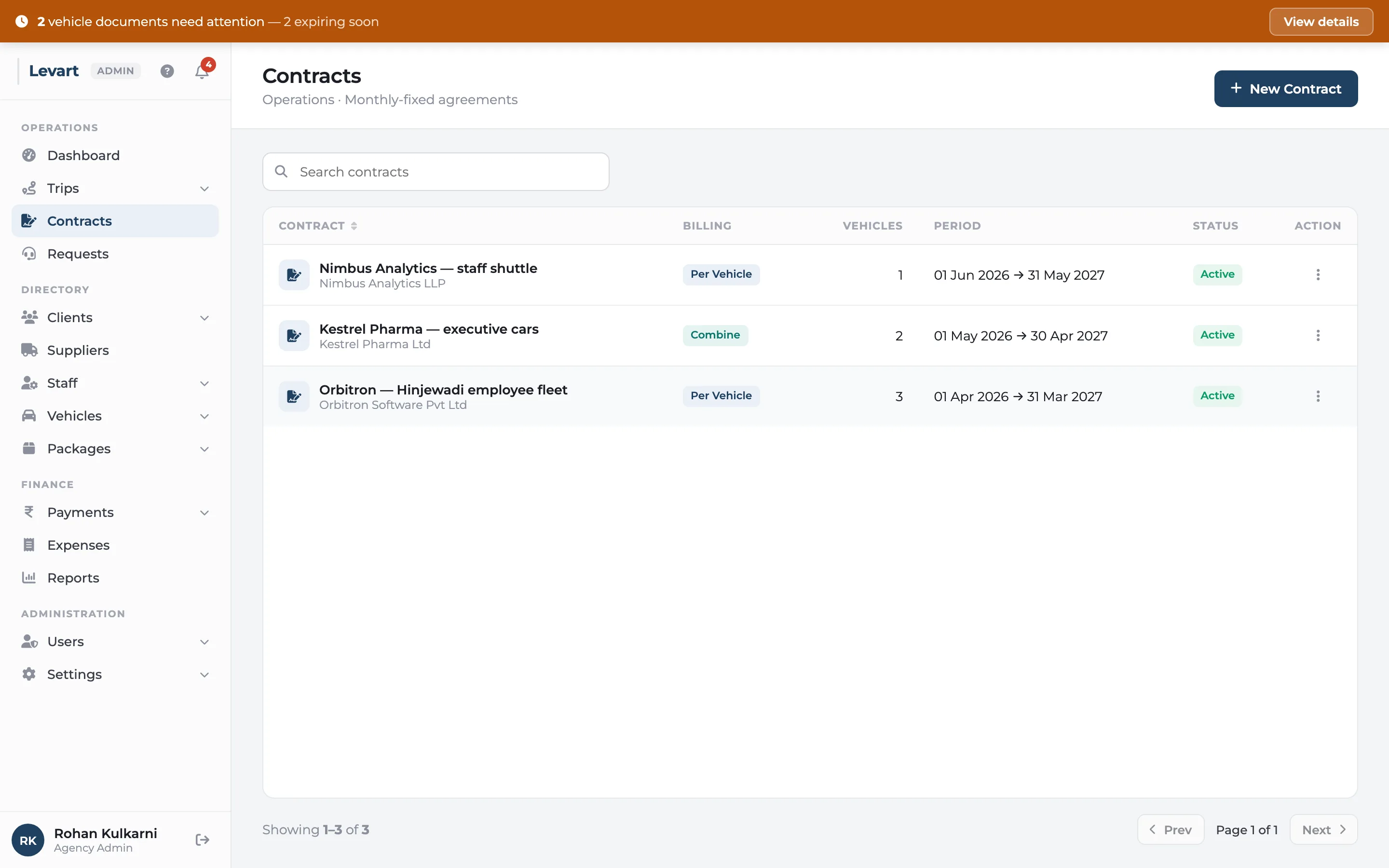
Everything the agreement says, in one place
Add the client and the vehicles they're getting. Give each vehicle its own package, or put the whole contract on one common package. Big clients often split the bill by department head, so you can add officers, each with their own vehicles and their own invoice.
Then the money side: GST rate and whether it's forward or reverse charge, TDS, the credit period (which sets each invoice's due date), any advance the client paid up front, and a late fee if you charge one.
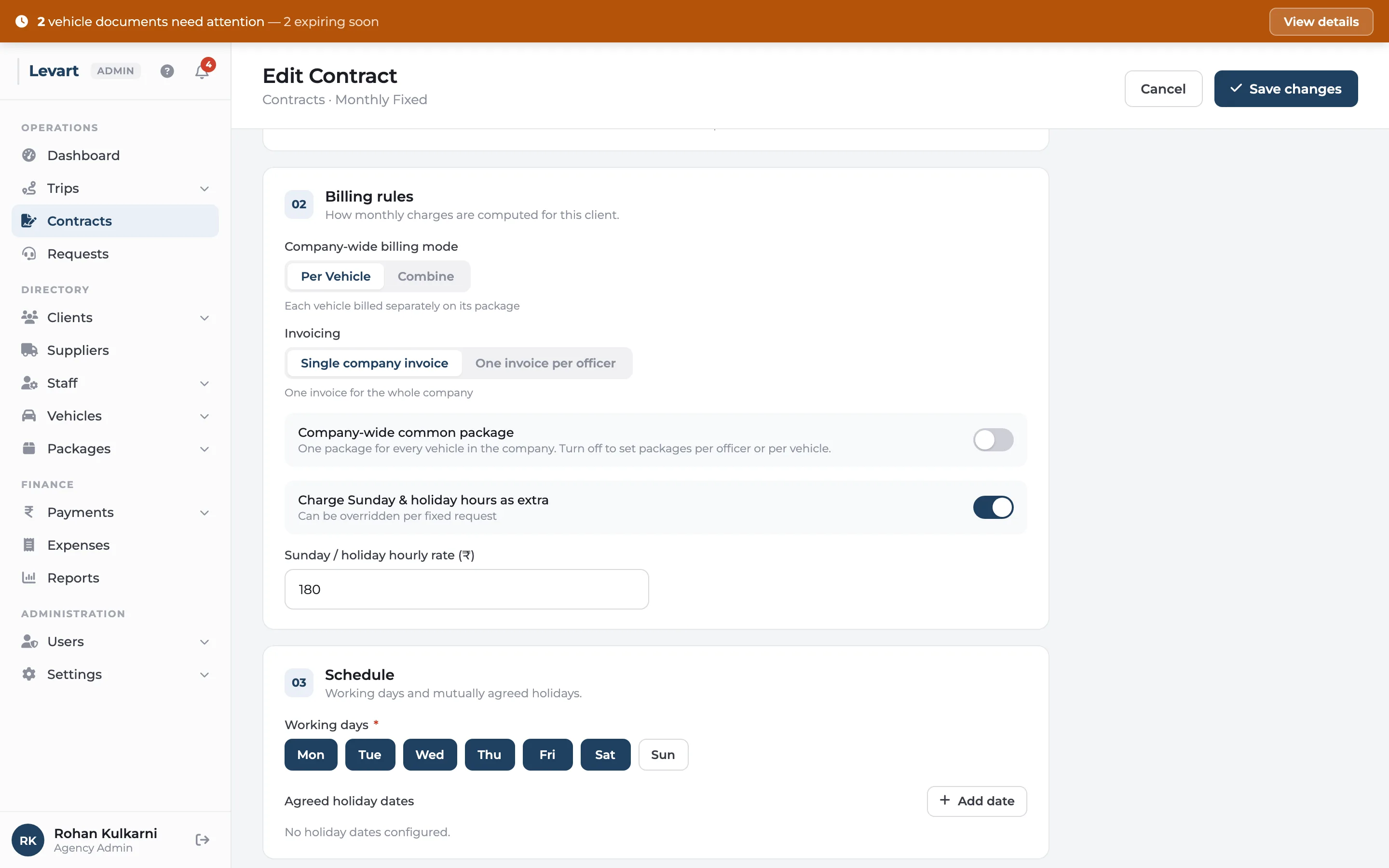
Extra kilometres, billed per car or pooled
Most contracts bill extra kilometres car by car. Some clients agree to pool them: all cars' kilometres are added up against the combined allowance and only the total excess is charged. Levart does both, per contract or per officer.
With pooling you can also carry unused kilometres forward. A quiet month banks its spare kilometres, and a busy month draws them down before anything is billed, with limits you set.
When you add a trip by hand, the kilometres, hours and the extra charge are worked out as you type, so you can see what the trip adds to the bill before you save it.
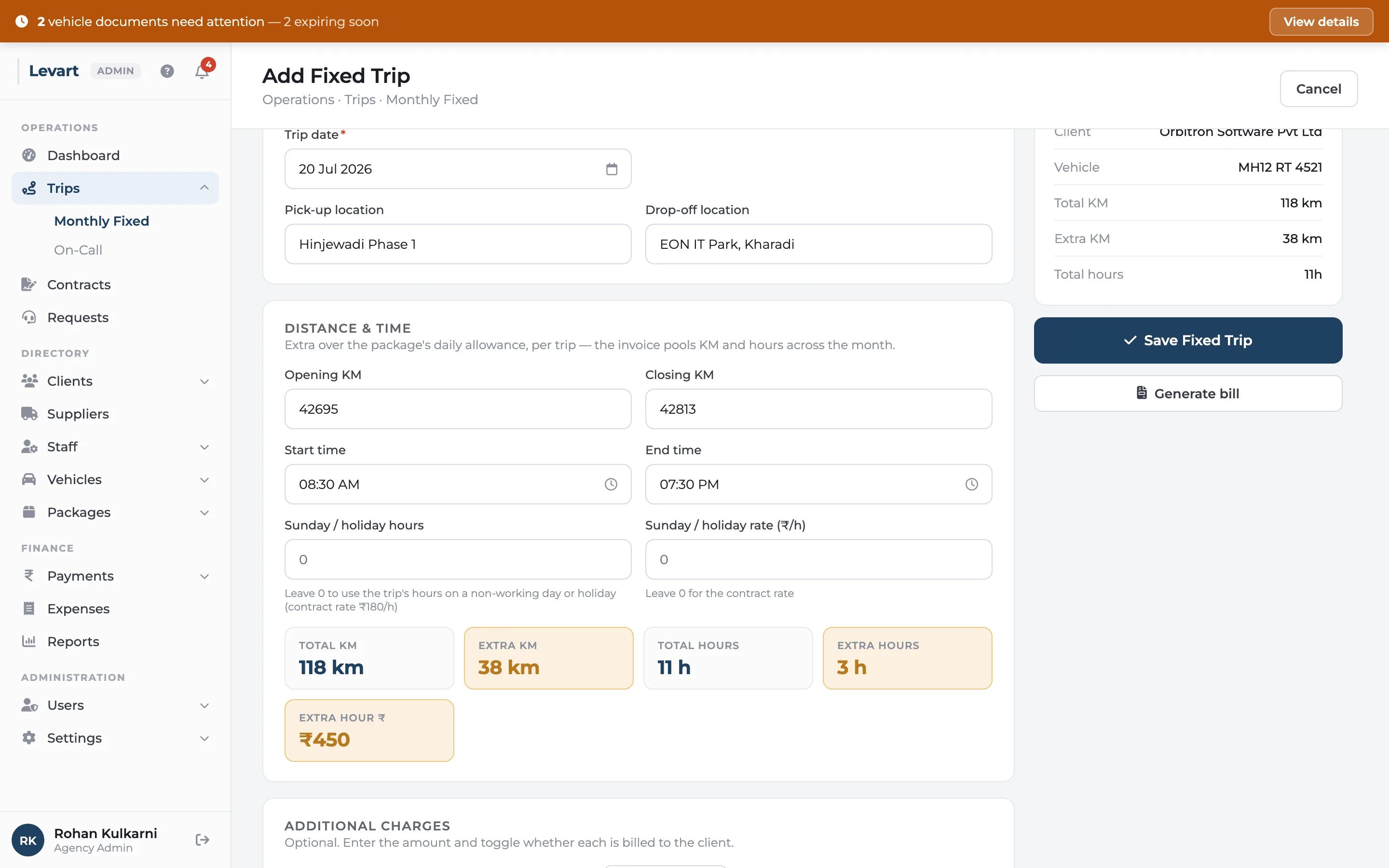
The small print that usually gets missed
Service conditions decide what else goes on the bill: whether fuel is included or billed at actuals from the fuel expenses you log against the car, whether tolls are passed on, whether driver allowance is charged separately, and whether outstation trips are allowed at all.
- Sunday and holiday hours billed at their own hourly rate
- Calendar month, from the contract's start date, or fortnightly billing
- Advance adjusted against invoices until it's used up
- Late fee charged pro-rata on the next invoice when one goes overdue
Trips: from the driver, in bulk, or by hand
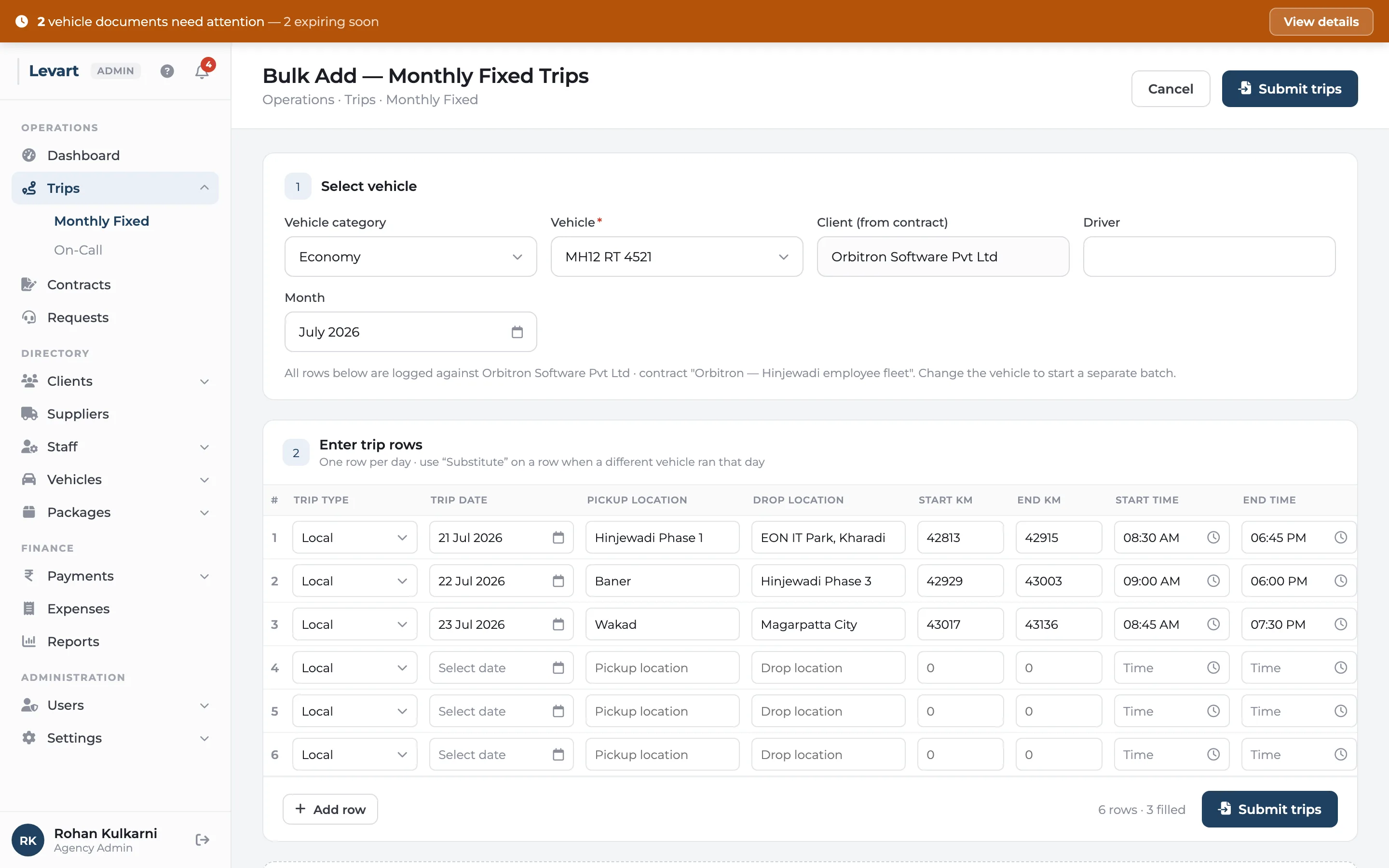
Trips on a contract come in from the driver's logsheet app, or you add them in the office. For a month of paper logsheets there's a bulk-add grid: pick the vehicle and month, and type or paste the rows.
When a contract car is off the road
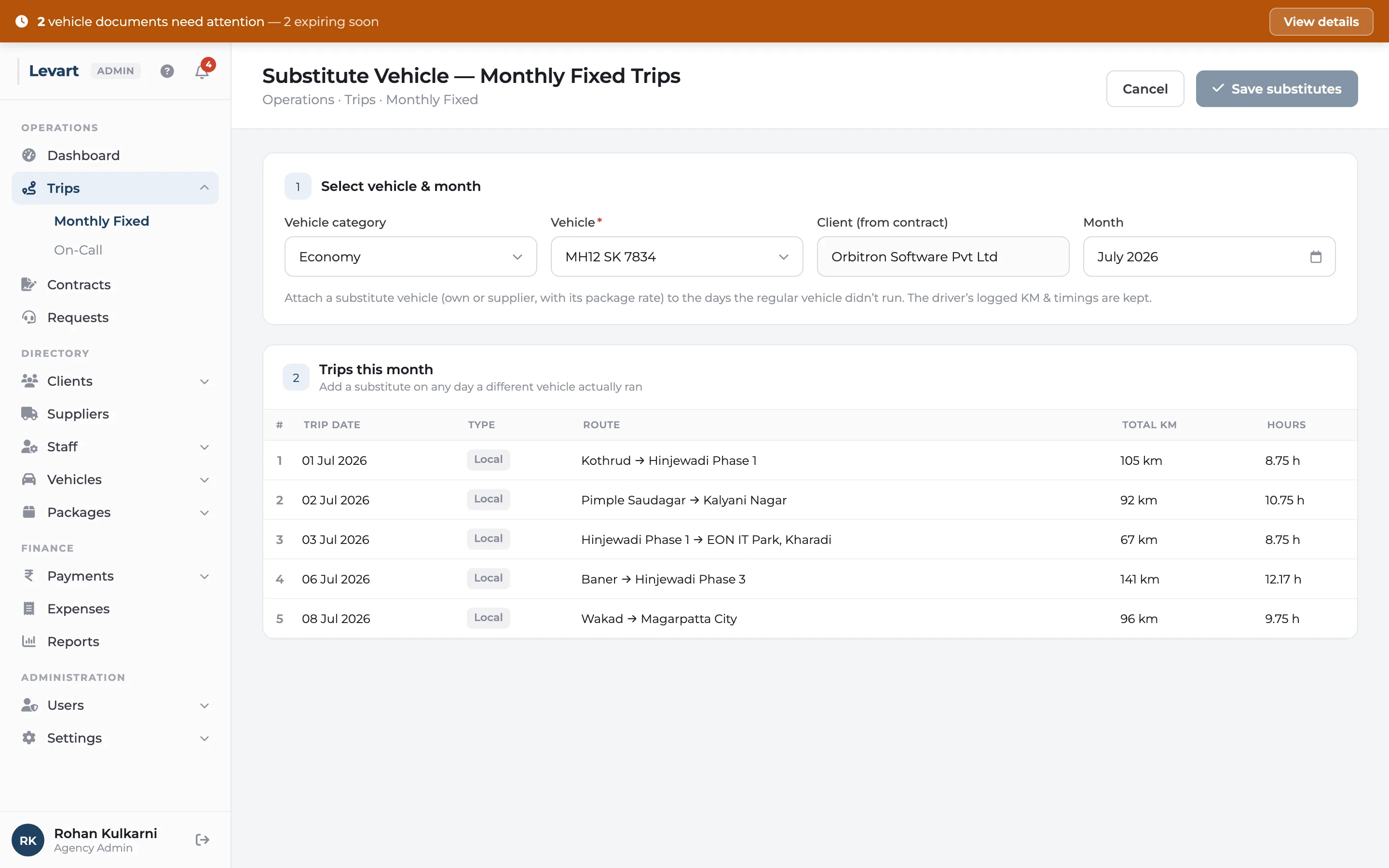
Attach a substitute to the trip: your own spare, or a supplier's car. The client is billed as normal. A car from a different supplier is paid at its own package rate, and the regular supplier isn't paid for that day.
Renewing next year's contract
When a contract ends, use Renew on the contract list. You get a copy with the dates cleared. Save it and the old contract is marked expired, with its vehicles moved to the new one. A vehicle can only be on one active contract at a time, so you can't bill the same car twice by accident.
Monthly fixed contracts: common questions
How are extra kilometres calculated on a monthly contract?
Each vehicle's kilometres for the month are compared with what its package includes, and the excess is billed at the package's extra-KM rate. If the contract pools kilometres, all vehicles are added together against the combined allowance instead.
Can one contract produce separate invoices for different departments?
Yes. Add officers (department heads) to the contract and assign vehicles to them; each officer gets their own invoice, with their own billing mode if needed.
Does Levart support fortnightly billing?
Yes. A contract can bill by calendar month, by month from its start date, or fortnightly — two invoices a month.
Goes well with
GST invoicing
CGST, SGST or IGST worked out for you, printed on your letterhead or your pre-printed paper.
Read moreDriver logsheet app
No more chasing paper logsheets on the 1st. Every trip is in the office the day it's driven.
Read morePackages & rate cards
8 hours / 80 km, airport flat fares, monthly packages: define them once, use them everywhere.
Read moreSee it with your own trips
Book a 30-minute call. Bring a month of duty slips or a contract, and we'll show you how Levart handles them.